
Consider K-LOVE and Apple Music for listening that leaves room for Scripture and reflection.
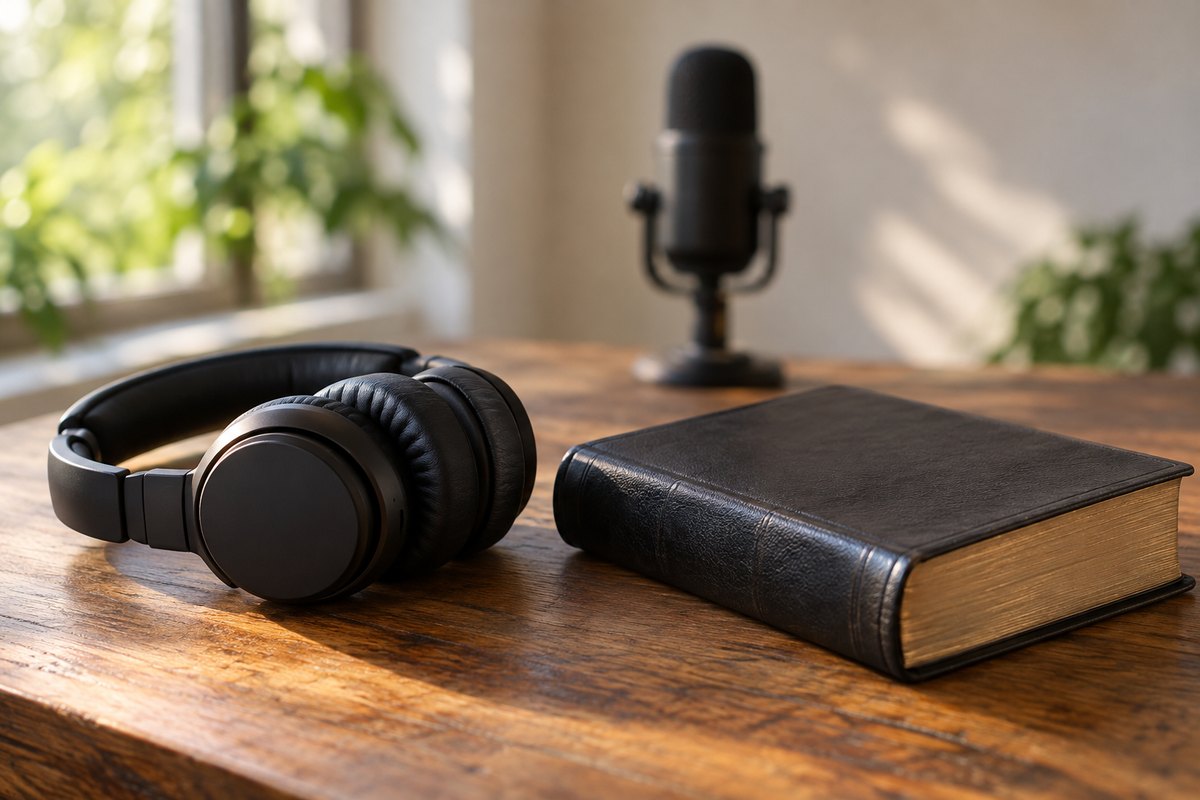
Music can provide words for praise or mark the beginning of a reflective moment. It can also become the whole activity, which may be exactly what you intend. Decide whether you want to follow a song closely, explore music or prepare for prayer. That decision gives a clearer starting point than opening a service and letting an endless sequence choose the direction.
The two apps below offer different listening tools. One combines music features with faith-related material; the other is a wider music service. Neither description is a reason to assume a particular worship song will be available. Check the actual recording you want and consider how it relates to the biblical subject you are exploring.
K-LOVE: music alongside faith content
K-LOVE describes a list for favourite songs, material about featured artists and a player bar that identifies the song being played. Its faith section includes prayer requests, opportunities to pray for others and daily verse images that can be shared. The Google Play listing flags adverts but shows no in-app purchases. Consider the advertising indication when deciding whether the listening arrangement suits the moment you have planned.
 ·
· 
The identification of a playing song provides a starting point for paying attention to its words. If a song interests you, consider adding it to the favourites list described by the app. A favourite is simply a way of organising a listening choice. It does not establish that the lyrics explain a passage accurately or that the recording is available for offline playback.
Prayer requests and verse images are separate from the music features. You can consider those sections without treating every session as a social activity. If you choose to submit a request, think about what you are comfortable sharing. The description does not explain every visibility setting, so examine the relevant information before including details about another person.
Apple Music: organise a listening selection
Apple Music describes playlists, personalised stations and music downloads for offline listening. Its listings present listening without adverts and include subscription conditions; Google Play also records in-app purchases. This is a general music service, so explore the relevant catalogue rather than assuming a dedicated Bible or prayer library. Confirm that the recordings you want are available under the access conditions you choose.
·
The described lyrics tools can accompany close listening. Some songs have translation and pronunciation support, but the description limits those tools to selected material. Do not assume a particular language or song is covered. Read the words that are available, compare their message with the passage you have chosen, and leave room to consider where a lyric is using imagery rather than quoting Scripture.
The service also describes automatic continuation of playback. For a prayer session, decide where you want listening to end rather than allowing more music to determine the length. If you plan to use downloads, prepare the selection in advance and confirm it opens as expected. Download availability does not mean a permanent right to keep every recording independently of the service's conditions.
Build a sequence around a biblical subject
Start with the subject of the passage, then consider whether a song gives language to a response. Gratitude might lead to praise; a difficult question might call for silence instead. You do not need a song for every part of prayer. A short selection with a deliberate end can leave more space for reflection than an extensive playlist chosen without a purpose.
For example, after reading a Psalm of praise, choose a recording whose words you want to examine. Listen once with the passage in mind, then consider what the song emphasises and what the Psalm says beyond that emphasis. You may decide to pray using your own words afterwards. This approach gives the recording a defined place while keeping the biblical text available for a fuller reading.
- Read the passage before deciding which musical theme fits.
- Listen for the meaning of the words, not only the melody.
- Stop after the chosen selection and consider a response.
- Keep another occasion available for exploring unfamiliar artists.
Does music need to run throughout prayer?
No. A song may introduce the moment and then finish. Spoken words, reading and silence can each have their own space. Adjust the listening arrangement to the activity, especially when following a spoken reflection would be harder with another recording playing at the same time.
Can a lyric stand in for studying its biblical theme?
A song expresses a message through an artistic form. A passage deserves attention to its setting and argument. Use the course route below for learning, or the prayer app route for guided reflection. Choose music for the role it can actually play in the moment you are planning.

My name is Clara. I am a writer, content creator and digital nomad. I travel the world while producing articles every day for the Vaga de Emprego SP portal, focusing on the job market, job opportunities, careers, extra income and professional development.
I am passionate about communication and I believe that clear, accessible information can help people find new opportunities and improve their lives through work.
On the portal, my goal is to create useful, up-to-date and relevant content for readers looking for job openings, professional tips, market trends and career guidance. Every article is produced with dedication, research and a commitment to the quality of information.
Besides writing, I also share experiences from my routine as a digital nomad, balancing travel, remote work and online content production.